What Czech STK inspection history actually shows
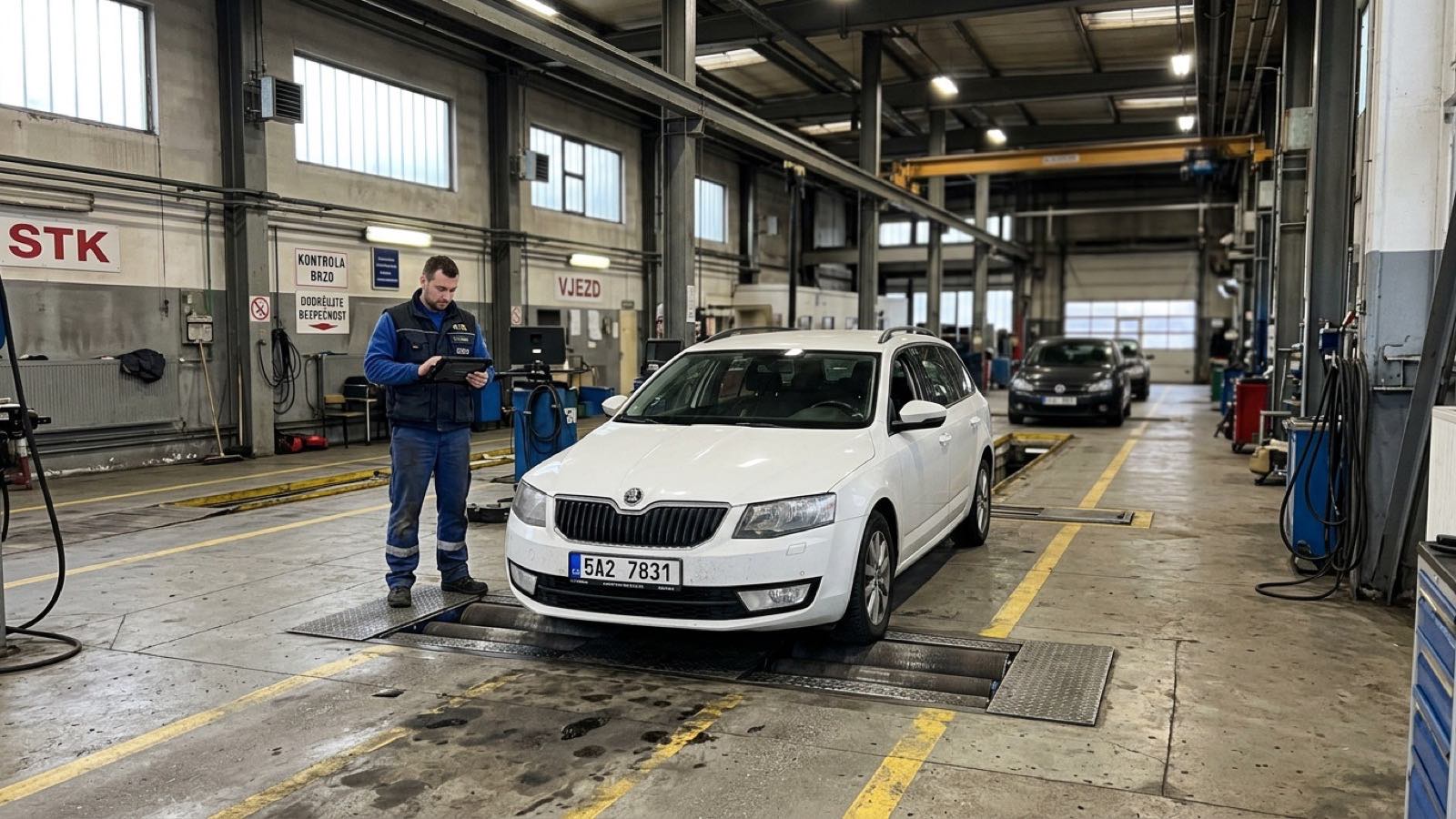
The inspection history for a Czech car comes from the Registr silničních vozidel, published at dataovozidlech.cz by the Ministry of Transport. Search by VIN, ORV or TP number and the dataset returns each inspection's type, station, validity dates and a status code the ministry does not explain. It leaves out a written defect description and the odometer reading, those live on a separate tool, kontrolatachometru.cz. The data has been published this way, as daily snapshots running weeks behind, since November 2025.
A Czech car's STK inspection history comes from the Registr silničních vozidel, the road vehicle register the Ministry of Transport publishes at dataovozidlech.cz. Look a car up by VIN, ORV document number or TP document number and you get, for every inspection, its type, the testing station, the dates it's valid for, a protocol number and a status code the ministry never spells out on the page itself.
What's missing entirely is a plain description of any defect found and the odometer reading, both of those sit behind a separate tool. Read the register on its own and you're only getting half the picture.
Applies to: the Czech Republic, vehicles held in the Registr silničních vozidel (historic, sports and diplomatic vehicles are excluded) Source: Ministry of Transport of the Czech Republic, dataovozidlech.cz Checked: August 2026 Main exception: the inspection dataset carries no defect description and no odometer reading; the ministry has published it in this open format, running a few weeks behind, since November 2025
What's actually in the dataovozidlech.cz record
The register's main dataset, Vozidla - technické údaje (vehicle technical data), carries a unique vehicle identifier called PČV, and a separate dataset, Technické prohlídky k vozidlům (technical inspections), links to it through that same number. Each inspection is one row:
| Field | What it shows |
|---|---|
| Typ | Inspection type, for example "P - Pravidelná" (regular) |
| Stav | A status code: A, B, C, or "Neuvedeno" (not stated) - the ministry doesn't document what each letter means |
| Kód STK / Název STK | The code and address of the testing station that carried out the inspection |
| Platnost od / Platnost do | The period the inspection result is valid for |
| Číslo protokolu | The protocol number for that specific inspection |
| Aktuální | Whether this row is recorded as the latest inspection of its type for the vehicle |
The ministry states outright that the dataset "does not contain information about vehicles, only about technical inspections," and that the "data is taken from the register unmodified; a blank value means the register itself doesn't have it." In practice: whatever the register doesn't hold, the export won't invent, and nothing here gets filled in on the ministry's behalf.
There are two ways to reach a single vehicle's record: the search tool at dataovozidlech.cz, which takes a VIN, ORV number or TP number and returns a CSV or PDF, or the open bulk data, published as a separate dataset for each calendar day rather than one combined monthly export. The ministry has published these daily snapshots in this format since November 2025, and they typically run a few weeks behind, so the very latest inspection can be missing for a while.
What's missing, even where you'd expect it
Three gaps are worth flagging. First, there's no written defect description: the A, B or C status code tells you an inspection got a certain classification, not what was actually wrong with the car. Second, there's no odometer reading here at all, mileage recorded at STK and emissions checks lives on a separate tool, kontrolatachometru.cz, which we cover in a companion piece. Third, ownership history, deregistration status and manufacturer or authorised-representative notices (in practice, recalls) are each their own separate dataset in the register. Read the STK export alone and you're seeing a narrower slice than it might look like. For what a vehicle history check can and can't tell you more broadly, across markets, see our general guide.
What the status code means, and why severity matters
Dataovozidlech.cz never spells out what A, B or C in the Stav field stand for, but Act No. 56/2001 Coll. shows why defects get graded at all. Under Section 7(4), if a serious defect (vážná závada) turns up at inspection, the authority marks the plate sticker with a re-test deadline, the last day of the month following the month the car was entered in the register. If a dangerous defect (nebezpečná závada) turns up, no valid sticker gets issued at all. Serious and dangerous aren't interchangeable terms, they carry different consequences, even though the open data's own status letter doesn't name which is which.
Reading gaps and repeats in the record
The Platnost do date tells you how close the next mandatory inspection is, same logic as any expiry date. The Aktuální flag can be true on more than one row at once, since it's tied to inspection type, not to the vehicle as a whole. A station changing between visits doesn't mean much by itself, drivers switch stations because they move or because of scheduling, but paired with another warning sign it's worth a question. And between two Platnost od dates, the record holds nothing at all: whatever happened to the car between inspections simply isn't there.
What Plateop does with this
A report for a Czech car by VIN at cesko.plateop.com pulls current technical data, the next STK due date and the vehicle's registered status through the official dataovozidlech.cz interface. Where the source allows it, the report adds a history of past inspections with the mileage recorded at each one, built from the Ministry of Transport's own published inspection archive. That second layer comes from a periodic batch delivery, so the most recent inspection can be missing for a few weeks, and for some VINs it won't appear at all. The report always states plainly which part came from the official register and which part Plateop added.
What this means for the buyer
Start with the Platnost do date so you know how close the next mandatory STK is. Then read the type and status code on every row, and for anything other than "P - Pravidelná" without an obvious explanation, ask the seller for the paper protocol from that specific inspection, it holds detail the open data doesn't. Check mileage separately, either at kontrolatachometru.cz or through a report that ties both layers together, and never treat a clean STK history on its own as proof that nothing happened to the car between inspections.
Sources
- Ministerstvo dopravy ČR — Registr vozidel (dataovozidlech.cz)
- Ministerstvo dopravy ČR — Otevřená data, datová sada Technické prohlídky k vozidlům
- Ministerstvo dopravy ČR — Kontrola tachometru (kontrolatachometru.cz)
- Act No. 56/2001 Coll., on the conditions of vehicle operation on public roads, Section 7 (Zákony pro lidi)